
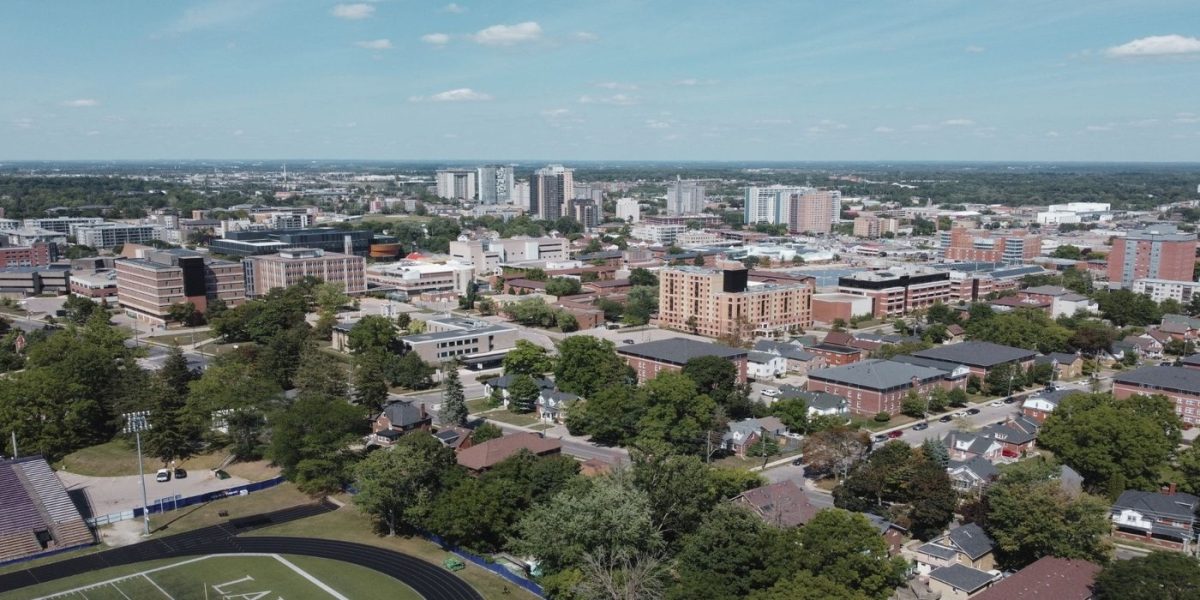
Kitchener–Waterloo (K-W) is one of Ontario’s most dynamic rental markets; it’s a tech hub anchored by large universities, rapid transit, and steady population growth. For investors considering student rentals, the region offers clear advantages along with a few important warnings.
Why Kitchener–Waterloo attracts student renters (and their landlords)
Two institutions anchor local student housing demand: the University of Waterloo and Wilfrid Laurier University. Combined, they represent tens of thousands of full- and part-time students, a repeatable source of tenant demand every academic year. In Fall 2024, the University of Waterloo alone reported more than 41,000 students across its campuses, while Laurier’s Waterloo campus registered just over 20,000 students. Those enrollments translate into continuous demand for furnished and shared housing within walking, biking, or short-transit distance to campus.
Beyond enrollment, K-W’s economy (built around tech companies, startups, and research) keeps the area appealing to both domestic and international students and young professionals. Transit infrastructure, particularly the ION LRT, has also reshaped where renters want to live by improving cross-city mobility and increasing demand along the transit corridor.
The Real Estate Market Right Now
Student housing in K-W has seen two conflicting trends recently. On one hand, the region continues to add rental supply (purpose-built and condo conversions), and new transit-oriented development has created pockets of strong demand. On the other hand, national and local reports claim that vacancy and rental dynamics shifted in the last couple of years, notably after a decline in international student intakes that temporarily increased vacancy rates in some segments even as overall rents rose for certain unit types. The Canada Mortgage and Housing Corporation (CMHC) and local studies note that supply has expanded but is often skewed to higher-end units, leaving affordability pressure for lower-cost rentals. These mixed signals mean investors must be selective about product type and location.
Which property types make sense for student rentals?
There are several common student-targeted strategies, each with pros and cons:
- Shared houses (multi-bedroom single-family homes) — High per-bed rent, strong demand close to campus, but management-intensive (turnover, wear-and-tear, municipal shared-accommodation rules) and sometimes less attractive to lenders.
- Multi-unit apartments / purpose-built student housing — Easier to scale, professional management, often newer with higher rents, but they require more capital and compete with institutional landlords.
- Condos rented by the room or to small groups — Good cashflow if purchased at the right price, but beware condo rules about short-term or group leases and potential condo fees that eat into yield.
- Basement suites / duplex units — Lower entry cost, steady demand, but zoning and licensing rules can be strict.
Choosing between these comes down to your risk tolerance, willingness to manage property, and financing options.
Neighbourhoods and micro-locations that outperform
Not all parts of K-W are equally attractive to students. Look for these proximity and amenity signals:
- Westmount / Uptown Waterloo / Northdale — Close to campus and walkable retail; consistently popular with students.
- South of University / Columbia / Clara-Victoria (near UW and LRT stops) — Short bike or LRT ride to campus; high demand and better rental rates near transit.
- Central Kitchener (near downtown and LRT) — Appeals to students who prefer Kitchener’s lower rents or nightlife; good for mixed tenant pools.
- North Kitchener / University Court — Offers more affordable houses with conversion opportunities to multi-bedroom rentals, attractive for groups.
Properties within a 15–20-minute bike ride or near an ION LRT stop have an edge in occupancy and rent stability. The LRT’s construction and operation have already nudged investment and rental demand along its corridor.
Numbers to run before you buy
Student rentals can look attractive on a per-bedroom basis, but be sure to run the math.
- Gross rent per bedroom: Estimate market rents for individual rooms (or whole-unit rents if leasing by group).
- Vacancy assumption: Use a conservative vacancy (3–6% for market-rate; higher if your unit targets lower-cost rooms or is off-campus). Given recent volatility, err on the side of caution.
- Operating costs: Factor in property taxes, insurance (higher for student houses), utilities (if included), maintenance (higher turnover = more repairs), and management fees (if you hire a company).
- Capital reserves: Student properties suffer faster wear; budget 5–10% of rental income annually for capex/repairs.
- Financing: Lenders may require higher down payments for multi-unit investments; interest rates and CMHC mortgage insurance rules will affect cash flow.
- Net yield and cash-on-cash return: Calculate both to understand annual return and short-term cash flow. Don’t forget to stress-test for 1–3 months of vacancy or increased maintenance.
If your expected net yield (after all costs, taxes, and a conservative vacancy buffer) is comfortably above comparable long-term rental yield in the region, then the risk-return tradeoff may be favourable.
Regulations and Risk Management
Municipal rules in K-W are evolving to manage shared accommodation, licensing, and safety. The City of Waterloo has a rental housing licensing bylaw, and Kitchener has moved forward on shared-accommodation discussions; both cities are focusing on health, safety, and standards for lodging houses. Before buying property, check local licensing, occupancy limits, property standards, and whether short-term or individual-room leasing is restricted or requires a license. Noncompliance can result in fines or forced vacancy.
Also factor in tenant-relations risk: student tenants are valuable but often short-term (one- or two-year leases), which increases turnover and admin work. Good screening, clear lease terms, and a documented maintenance plan will reduce headaches.
Practical Management Tips
- Standardize leases: These use co-tenant clauses, define shared space responsibilities, and require guarantors for international or younger tenants.
- Furnish smartly: Basic furnishing (beds, desks, chairs, fridge/stove) can justify higher per-bed rents and reduce vacancy when students move in quickly.
- Offer utilities-included tiers: Simpler for students, but price carefully to avoid being eaten by winter utility spikes.
- Professional cleaning between terms: Reduces complaints and speeds turnover.
- Hire or partner with a local property manager experienced in student rentals (they understand seasonal move-ins, snow-clearing needs, and damage control).
Exit Strategy and Diversification
Student rental investments can be cyclical. Have an exit strategy: can the property be repositioned to attract young professionals or families if student demand softens? Is the area improving (transit, retail, tech jobs) such that long-term appreciation is likely? Properties near transit and amenities tend to have better liquidity and multiple exit options.
Consider diversifying your rental portfolio across property types (one student house plus one condo for young professionals) to smooth seasonality and risk.
Is a student rental near Kitchener–Waterloo right for you?
- Do you want higher per-bed cash flow, and can you handle higher turnover and management intensity?
- Are you comfortable navigating municipal licensing and potential regulatory shifts?
- Have you stress-tested rents with conservative vacancy and higher maintenance assumptions?
- Is the property within easy bike/short-transit distance to UW or Laurier, or near an LRT stop? Proximity matters.
If you can answer yes to these and your numbers work, Kitchener–Waterloo can be an excellent market for student-targeted investments, especially if you focus on well-located properties for sale, understand the operational demands, and stay ahead of local rules. If you are considering a student rental in Kitchener–Waterloo, speaking with a local real estate professional can help you assess neighbourhoods, zoning considerations, and long-term investment potential before moving forward.
Contact a Crown Realty REALTOR® today!
Looking for an experienced REALTOR® that specializes in the local real estate market? At Royal LePage® Crown Realty we are focused on helping you unlock your future.